
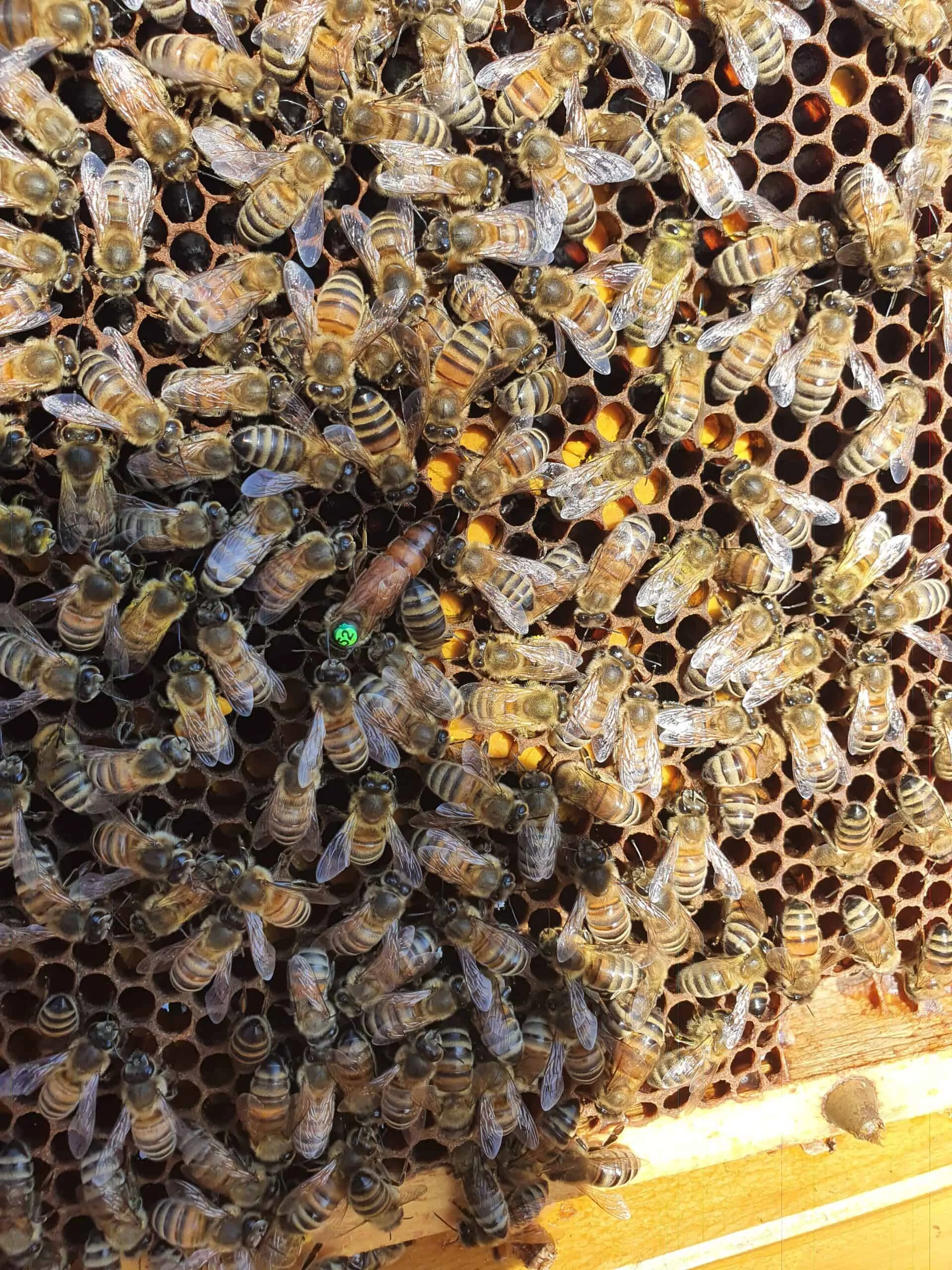
A choice of bees and beekeeping strategy
In Valais, the question comes up regularly: Buckfast or Carnica?
In our apiary experience, both can perform well. The alpine climate, with pronounced contrasts, variable springs and intense but short nectar flows, rules out neither. Breeding philosophy, selection goals and the long-term direction of the apiary also matter. The views below reflect our practice; they do not guarantee performance at every site.
Carnica: experience in an alpine setting
Carnica is valued for its suitability to mountain regions. Overwintering, use of stores and spring development are among the traits worth considering. Its often gentle behaviour appeals to hobby and professional beekeepers. In Valais, it can fit traditional or more extensive management approaches. The individual colony and its origin remain important.
Buckfast: a choice for targeted selection
Our choice has been Buckfast, without considering Carnica inferior.
Buckfast offers a broad foundation for selection work. Lines have long been selected for traits including productivity, gentleness, brood development and steadiness on the comb. A further focus today concerns traits associated with Varroa resistance, particularly VSH and SMR. VSH Suisse also provides information on these topics.
In Valais, nectar flows can be intense and brief. Brood development suited to the site is therefore of interest for honey production. Choosing a Buckfast queen alone does not guarantee yield or colony growth: origin, mating, selection, management and season must be considered together.
What about the dark bee in Valais?
The dark bee has strengths of its own and historic connections with many regions. In our consideration of honey production in Valais, its response to cold spells is an important topic: a marked reduction in brood can complicate planning where nectar flows are short.
This assessment should be read as experience within a particular beekeeping context. It is neither a blanket judgement about the breed nor a statement about every colony. Biology, location and production goals deserve to be considered together.
Buckfast and Carnica under alpine conditions
Valais has marked temperature differences, irregular springs and sometimes short, intense nectar flows. Alongside hardiness, queen selection should therefore consider brood dynamics, management of stores and responses to breaks in the weather.
Ask about each queen’s origin, mating method and the observations actually available. A breed name does not replace information about the specific line.
Breed matters, and so does selection
For Buckfast or Carnica, the decisive factor is not simply the name, but breeding quality, local adaptation and consistency with the beekeeper’s aims. Our choice of Buckfast is connected to breeding, genetics and work on traits related to Varroa resistance.
VSH and SMR are selection goals, not guarantees of complete resistance. Selection does not replace colony health monitoring or management adapted to the situation.
There is no ideal bee for every condition. There are considered choices for a location and a clear beekeeping strategy.
Explore Buckfast queens, breeding and selection and Varroa resistance, VSH and SMR.