
A photo from a distance
Only if safe, photograph the swarm and its surroundings. WhatsApp is an external service; you can also call.
SOS BEE SWARM
Have you spotted a cluster of bees on a tree, fence or near your home? Keep your distance and contact us.
01 — SOS BEE SWARM
Do not touch, spray or try to move the swarm. Keep children and animals away. There is no need to approach the bees to contact us.
02 — SOS BEE SWARM
Only if safe, photograph the swarm and its surroundings. WhatsApp is an external service; you can also call.
Provide the municipality, address and where the bees have settled.
Describe approximate height and obstacles without climbing or intervening yourself.
03 — SOS BEE SWARM
Collection is generally free when the swarm is easily accessible without building work, dismantling or hazardous access. We assess the situation with you before travelling.
04 — SOS BEE SWARM
Primarily around Crans-Montana and Sierre. Elsewhere, contact us to check. Weekends may be possible depending on availability; a message does not confirm an intervention.
05 — SOS BEE SWARM
We do not dismantle roofs, chimneys, shutters or walls. Describe the situation so we can advise on the next point of contact.
This service concerns honey bee swarms, not wasps or wild bees. A compact exposed cluster can suggest a swarm; a closed nest or insects entering a cavity may indicate something else. A photo does not always allow certain identification.
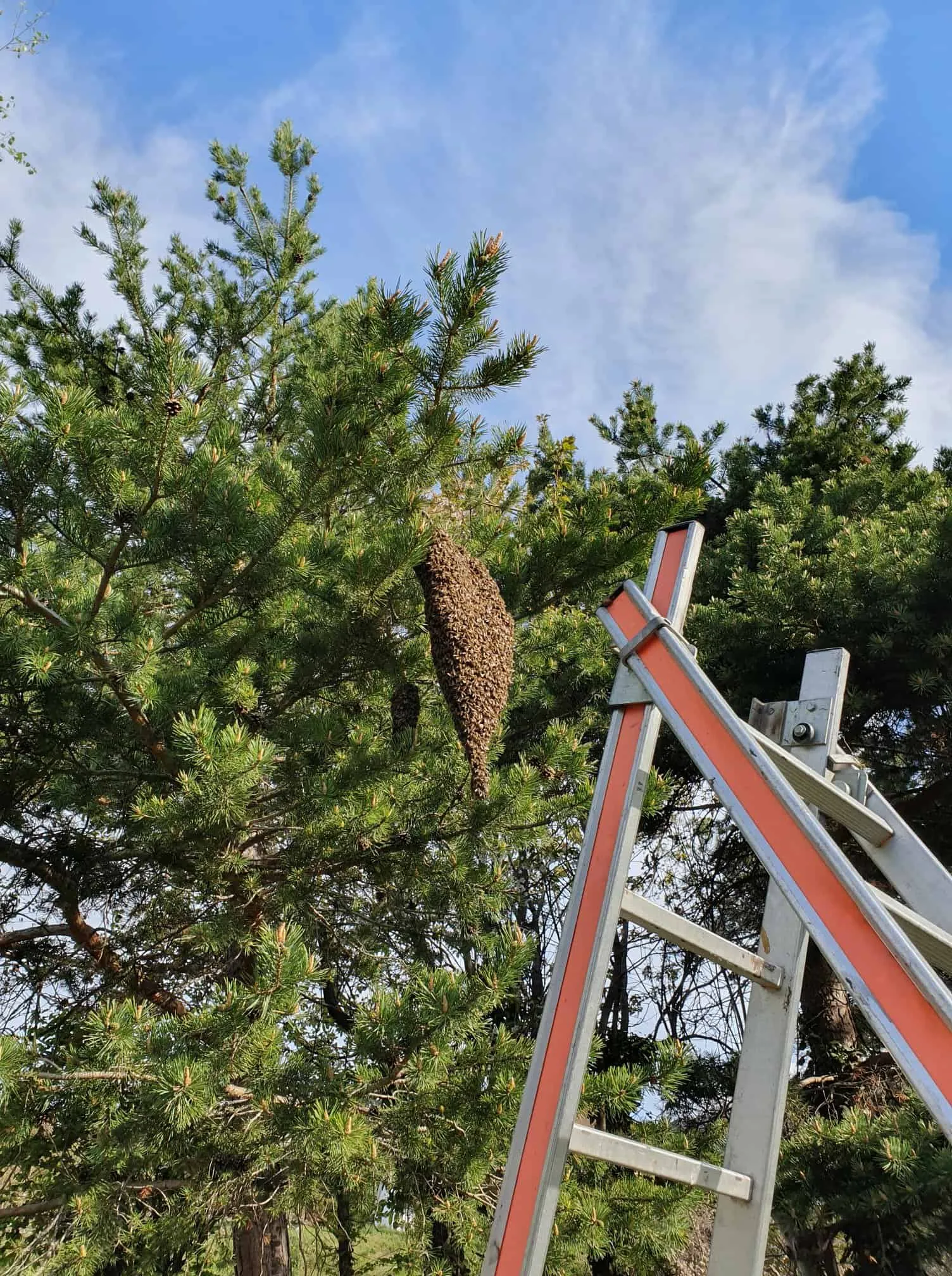
A settled swarm often forms a dense cluster: the bees gather closely together, as shown in these photos.
Lots of flying insects alone do not identify a bee swarm. They may be wasps or insects coming and going from a nest. A honey bee swarm can still be in flight, however: no visible cluster does not rule one out.
If unsure, send an overview photo taken from a safe distance. Do not approach to identify the insects or climb a ladder.
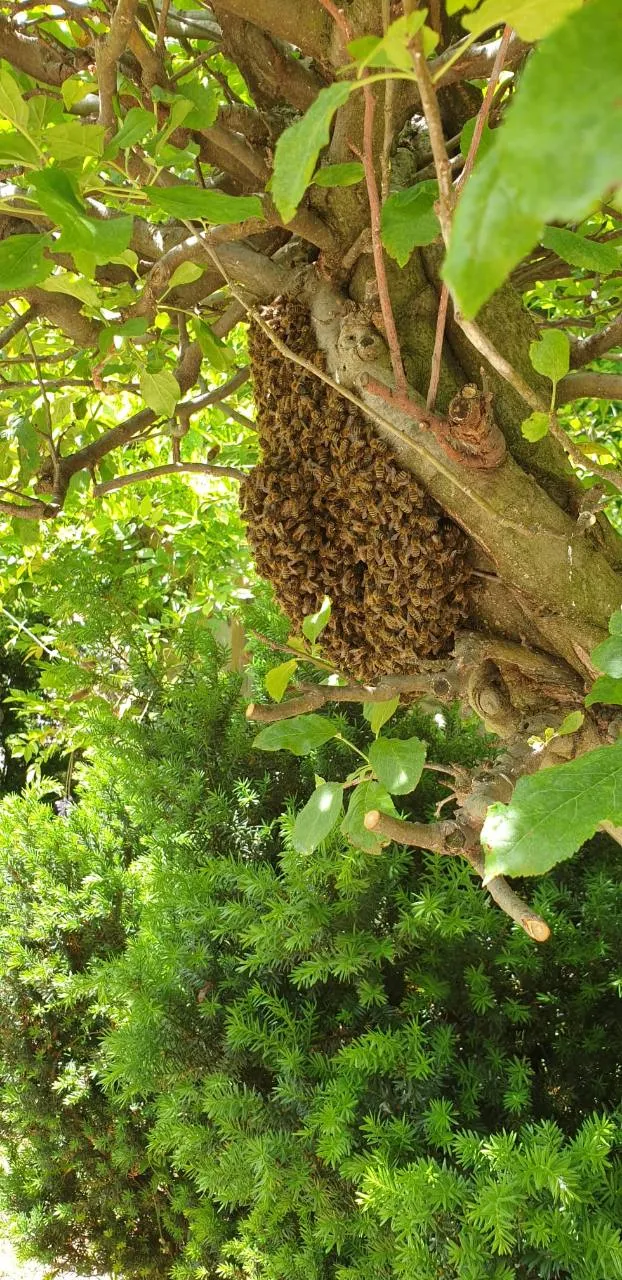
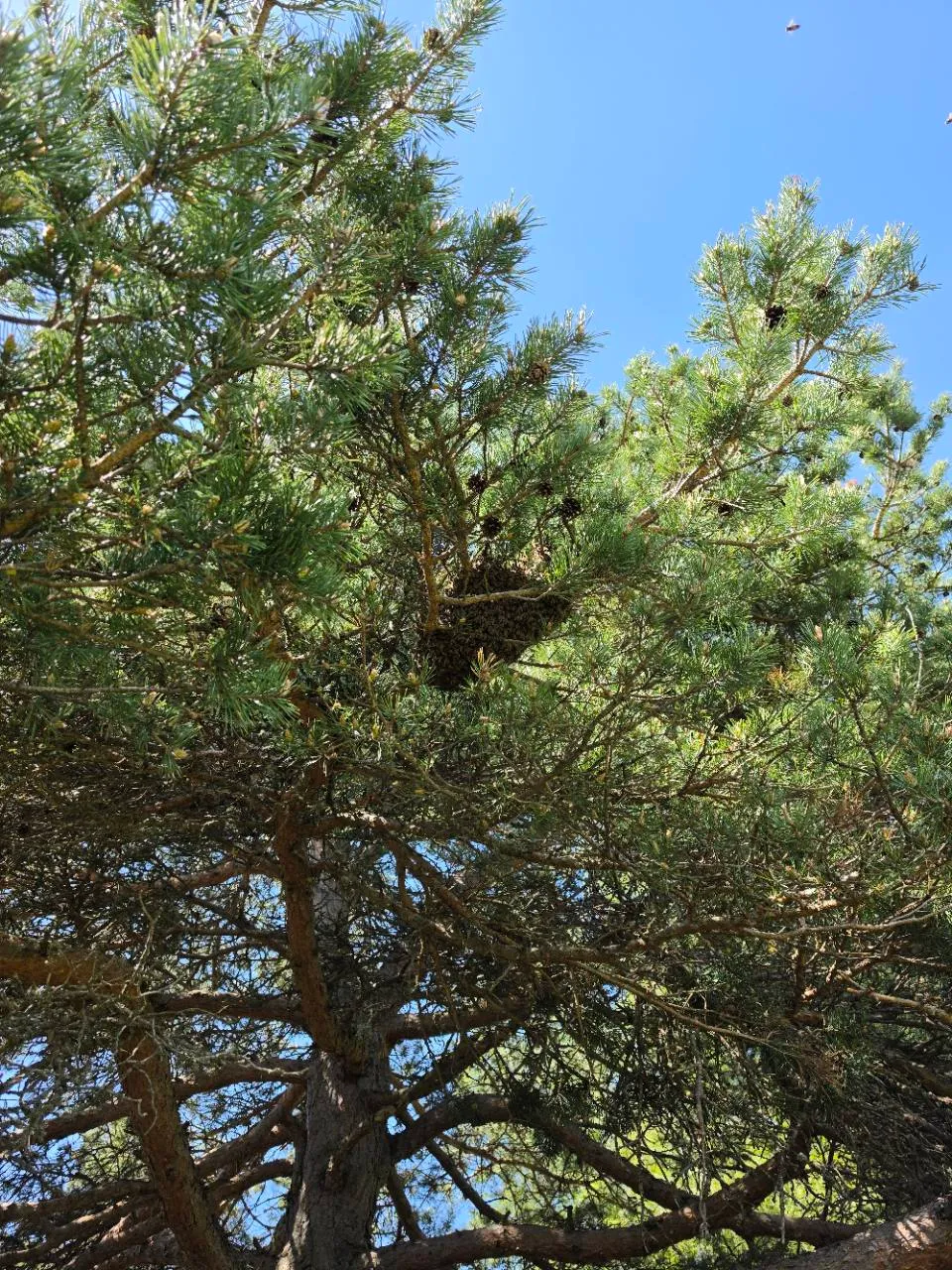
Swarming is a natural way for a colony to reproduce. A queen and some of the bees leave the hive to form a new colony.
Source : Agroscope / apiservice — L’essaim artificiel (2024, PDF)
No. A dense cluster is a clue; flying insects may also be wasps. A photo taken from a safe distance helps assess the situation.
Not necessarily. Young bees also make orientation flights in front of their hive. Heavy flight activity alone does not mean a swarm is leaving.
Yes. Even a generally calm swarm should be observed from a distance. Keep children and animals away.
Source : SAR — L’essaim d’abeilles
A swarm is looking for a new home and may move on. Report it when you notice it; we cannot predict how long it will stay.
Source : SAR — L’essaim d’abeilles
Leave collection to an experienced person. Height and access can make it dangerous. Do not climb a ladder or shake the branch.
Care continues after collection: the beekeeper monitors the colony’s health and intervenes when needed.
Source : Agroscope — Maladies des abeilles
A QUESTION, A PROJECT?
Describe what you need and your preferred timing. We will discuss the possibilities and conditions with you directly.